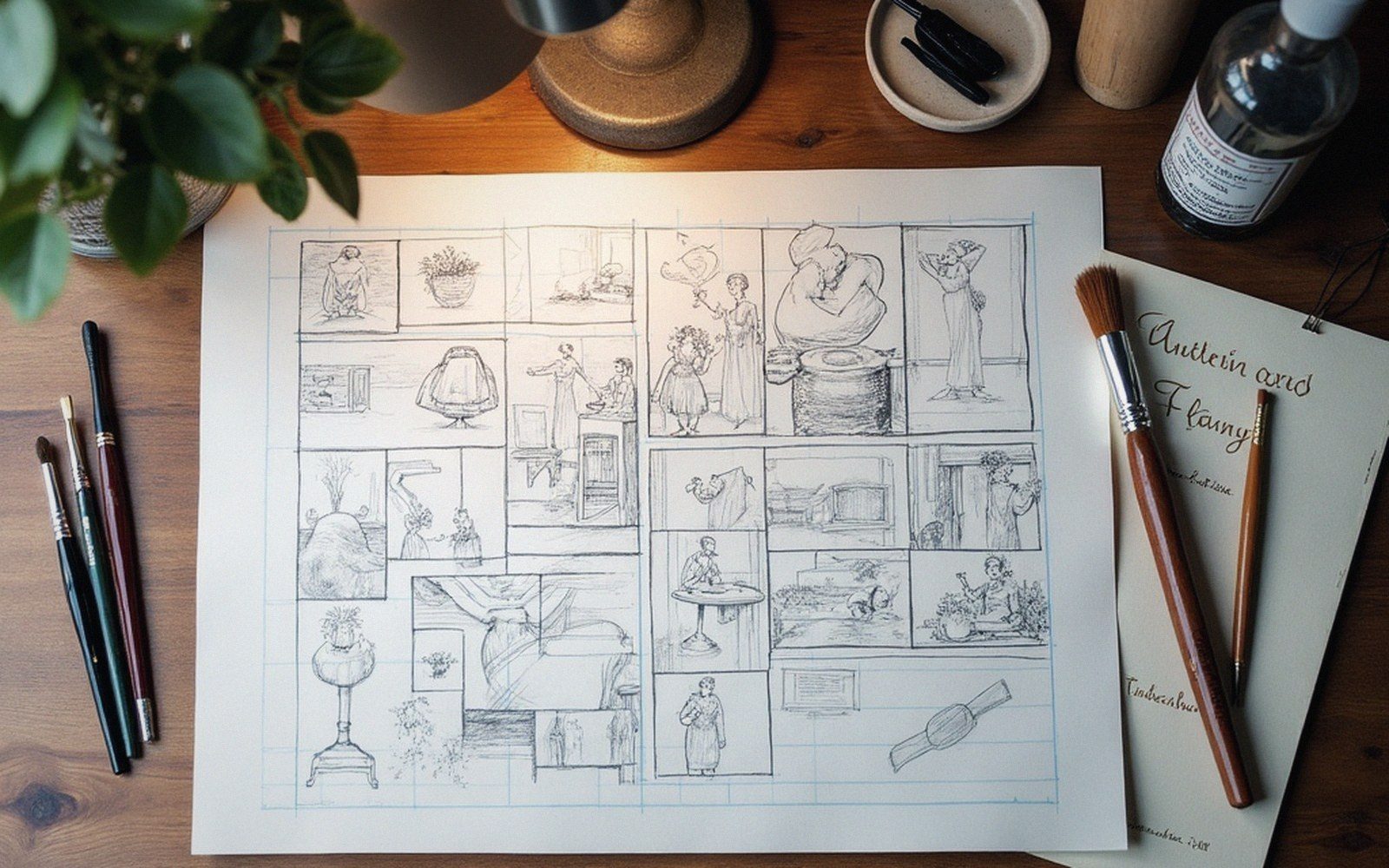
The gutter is time
The white space between panels is not decoration. It is the interval the reader crosses — and its width decides how far apart two moments are.

What the gap actually does
A panel is a frozen instant. The drawing inside it cannot move; the reader's eye does. To get from one panel to the next, the mind crosses the gutter — the white space between — and in crossing it performs an act called closure: it constructs what happened between the two states it has been shown. That construction takes a measurable experiential beat. The gutter is where cause becomes effect, where a raised fist becomes a struck jaw, where a face at a window becomes the same face on a street below. The drawing shows the before and the after. The reader invents the during.
This is what makes the gutter categorically different from any other element on the page. A panel can only show; the gutter makes the reader do. That doing is the rhythm of comics. Compress the gutter and the two panels blur together into something approaching simultaneity — two angles on the same instant. Widen it and the interval declared to the reader grows. A thick gutter after a figure closing a door means: time has passed. The room is different now. The same image pair with a hairline gap means: the door is still swinging. Both readings live in the width, not the drawing.
The principle scales. On a standard grid — six panels, gutters running three millimetres — the visual tempo is brisk, each transition a light skip. Expand the gutters to five or six millimetres and the same beats feel slower, more deliberate, as if each panel breathes out before the next begins. The art has not changed. The spacing has changed the reader's sense of duration.
Grid decisions that are really time decisions
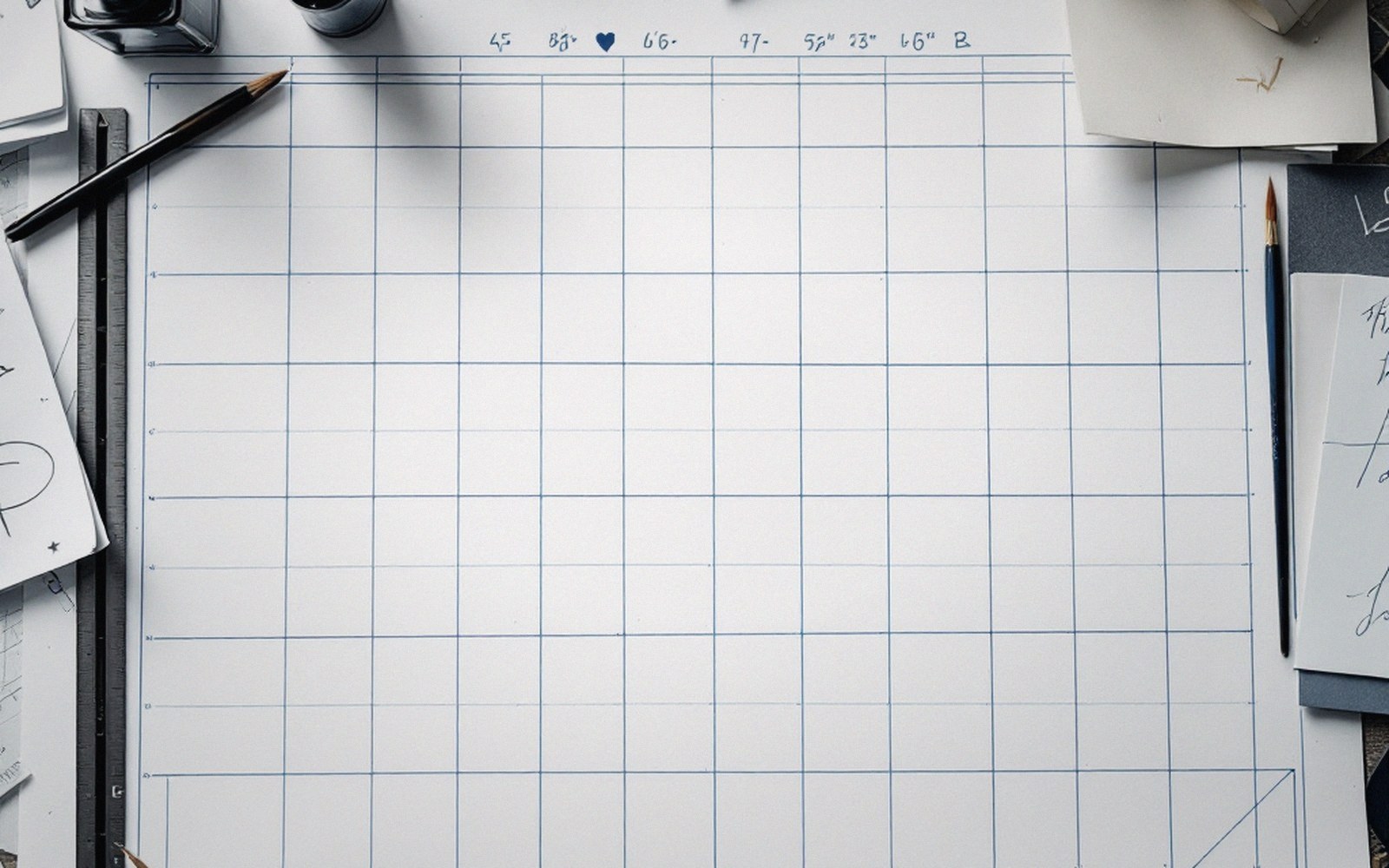
Because the gutter is structural rather than drawn, it is fixed before any art goes on the page. The decision that a fixed grid is freedom is also, unavoidably, a decision about default tempo. A cartoonist who locks in tight gutters has committed to a certain pace for the whole book. Changing that pace later means changing the gutter width, which means changing the grid, which means changing where every panel sits — a cascade. This is why the gutter width belongs in the thumbnail stage, not the finishing stage.
The horizontal gutter and the vertical gutter are worth treating separately, because they do different work. A horizontal gutter separates rows: it marks the passage of time between one tier and the next. A vertical gutter separates panels within a row: the gap tends to read as a shorter interval, two moments within the same continuous scene. You can use this asymmetry deliberately — tighter between panels in a row for rapid exchange, wider between rows when a new time or place begins — without the reader ever consciously noticing why the pacing feels right.
Splash pages and bleeds are the limit cases. When the gutter disappears entirely — when a panel runs edge to edge against another, no gap — the reader's brain receives the two images almost as one. Some artists use this to indicate shock or overlap; others to compress action sequences so brutally they read at near-cinematic speed. At the opposite extreme, an entirely white splash gives the gutter infinite width: an unspecified gap, a silence the reader fills with as much time as the story demands.
The reader's share
The temptation when talking about the gutter is to treat it as a passive interval, the absence between real things. It is worth resisting that. The gutter is where the reader's imagination is engaged at full load. Everything the cartoonist cannot show — consequence, implication, the cruel passage of years between two panels — lives there. Getting the width right is not a typographic nicety. It is the fundamental control over how much work you are asking the reader to do, and how long you are letting that work feel.
Width is time. That is the whole sentence.