Beats per page
Every page has a budget. Spend it wrong and the reader either races past or grinds to a halt.
The count that governs everything
A beat is a unit of story time: a new piece of information, a change of expression, a line of dialogue that shifts the situation. It is not the same as a panel. One panel can hold two beats; one beat can stretch across three panels. But the panel count is where you start counting, because that is the decision you make at stamp size.
The practical ceiling on a standard comics page — roughly ten by fifteen inches at print — sits somewhere between five and eight panels before visual density begins to work against the reader. That ceiling drops immediately if any panel is large, if the dialogue is heavy, or if the action requires clear choreography. A six-panel grid with two beats per panel is a busy page. A six-panel grid with one beat each, reading as single punchy cuts, moves fast.
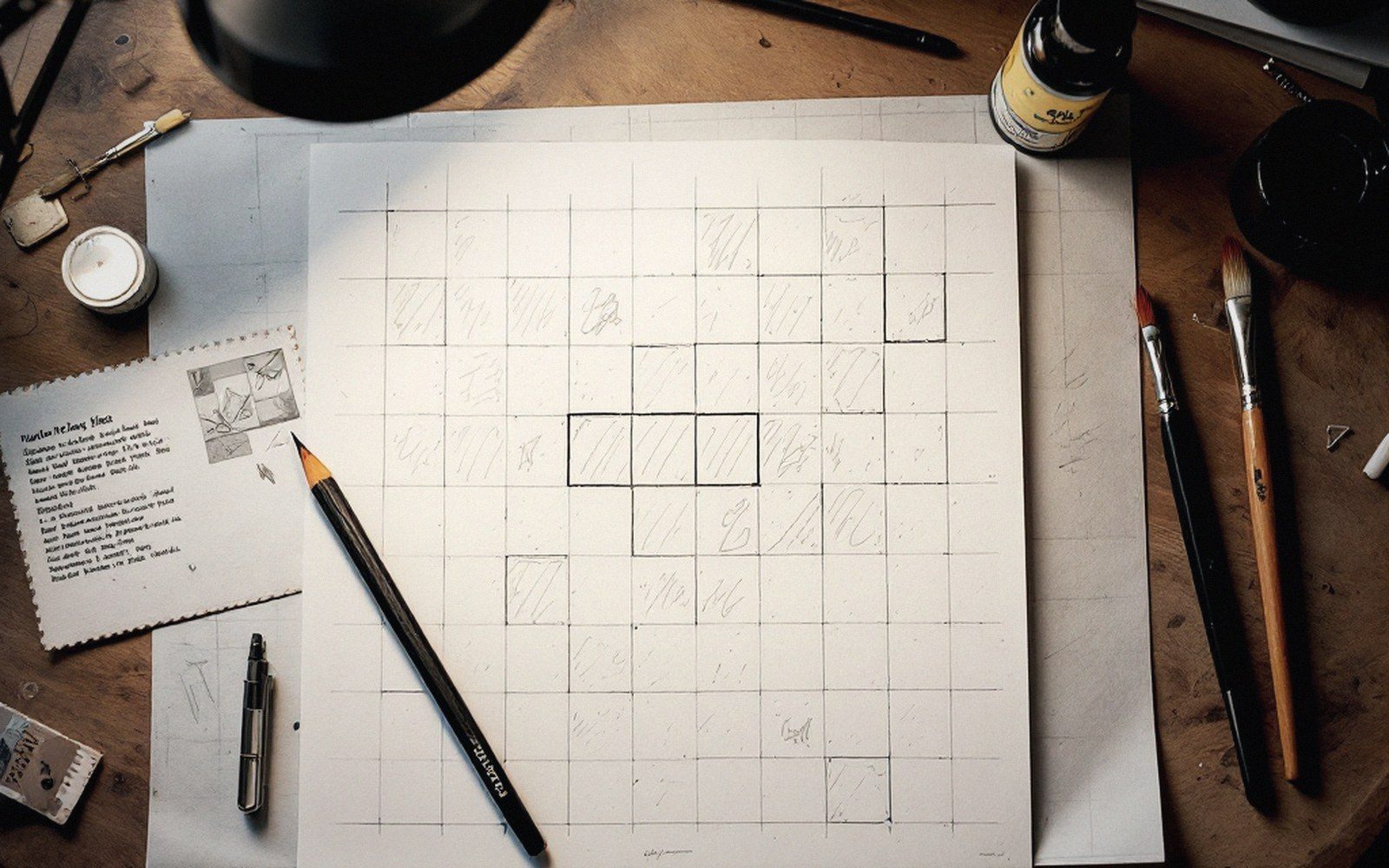
What the thumbnail reveals — if you draw it small enough to see the whole page as one object — is whether the beats are distributed or bunched. Three panels of quiet building followed by one panel of consequence: that is a rhythm. Four panels of consequence with no breath between them: that is noise. Neither is wrong in principle; both are wrong when they happen by accident.
The other variable is where the page ends. A beat that closes the page cleanly gives the reader permission to pause. A beat that is deliberately incomplete — mid-sentence, mid-motion, mid-revelation — pulls the turn. The turn is the strongest pacing lever on the whole page, and the beat count is what arms it. Run out of beats two panels early and the last panel drifts; overspend and the turn arrives before the reader is ready.
Count the beats at the thumbnail stage, before any rendering, before any lettering. A tick beside each panel forces the question: what changes here? If the answer is nothing, the panel is not earning its space in the budget.