The Turn
The right-hand page is seen before it is read. Design for that.
What the Reader Gets for Free
Open any book to a spread and your eye lands on the right-hand page first — not because you decide to look there, but because the brain reads the whole visual field before it reads the words. The left page gets attention in sequence; the right page gets it as ambient information the moment the book opens. That asymmetry is one of the oldest structural facts in page-based storytelling, and ignoring it is expensive.
The convention has a name: the turn. What sits on the right-hand page is what the reader sees before turning, and what they see first after turning. Both moments matter, and they pull in opposite directions.
Loading the Right Page
Before the turn, the right-hand page should withhold. A full reveal, a punchline, a character's true identity — none of these belong on the right side of a spread, because the reader has already absorbed them before reading the left page that was supposed to build toward them. The sequence collapses. Nothing lands.
This is why cliffhangers and reversals are traditionally placed at the bottom of a right-hand page rather than its centre or top: you want the eye to arrive at the critical image at the last possible moment before the physical act of turning. A panel positioned there functions like a held breath. The turn itself becomes part of the pacing — the gutter between the last right-hand panel and the first left-hand panel of the next spread is not ink and paper; it is the reader closing the book on one world and opening it onto another.
After the turn, the new right-hand page does the opposite job. Now it earns the reveal that the previous spread withheld. A splash on the first recto of a new spread — the character finally seen, the location established at full scale — hits with the accumulated pressure of everything the reader didn't quite see on the page before.
Thumbnailing for the Turn
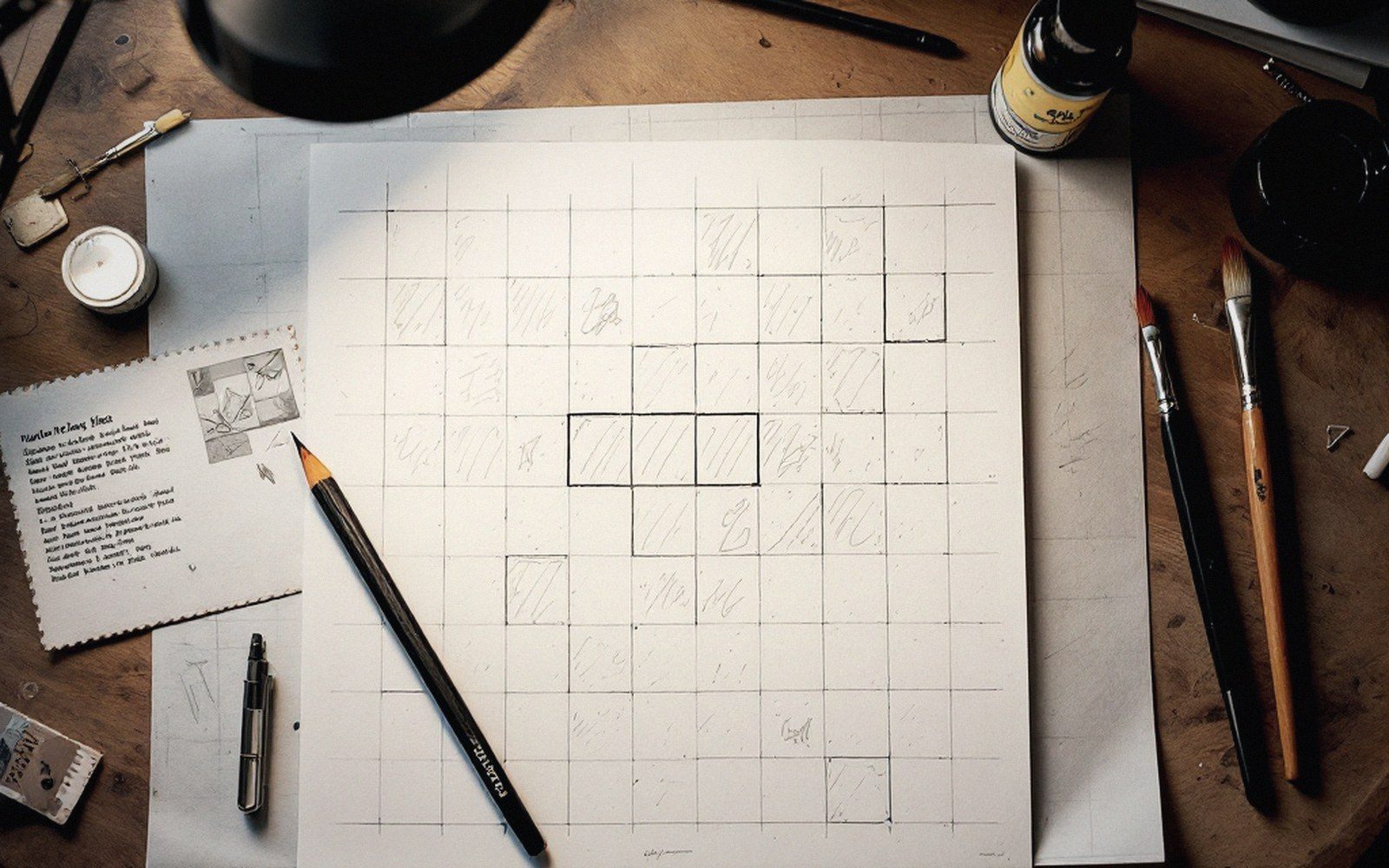
At stamp size, this is easy to check: lay your thumbnails in pairs, left and right, and ask what the right page gives away before you want it to. Move the reveal left. Weight the right page toward tension and incompleteness — a figure mid-action, a line of dialogue that needs an answer, a composition that points toward the turn. The page that faces you when you close the spread should make you want to open it again.
The turn is not a special effect. It is a structural joint, and it needs to be designed at the same moment the grid is set.