Non-photo blue
The pencil the camera cannot see — and what that freedom permitted.
The invisible layer
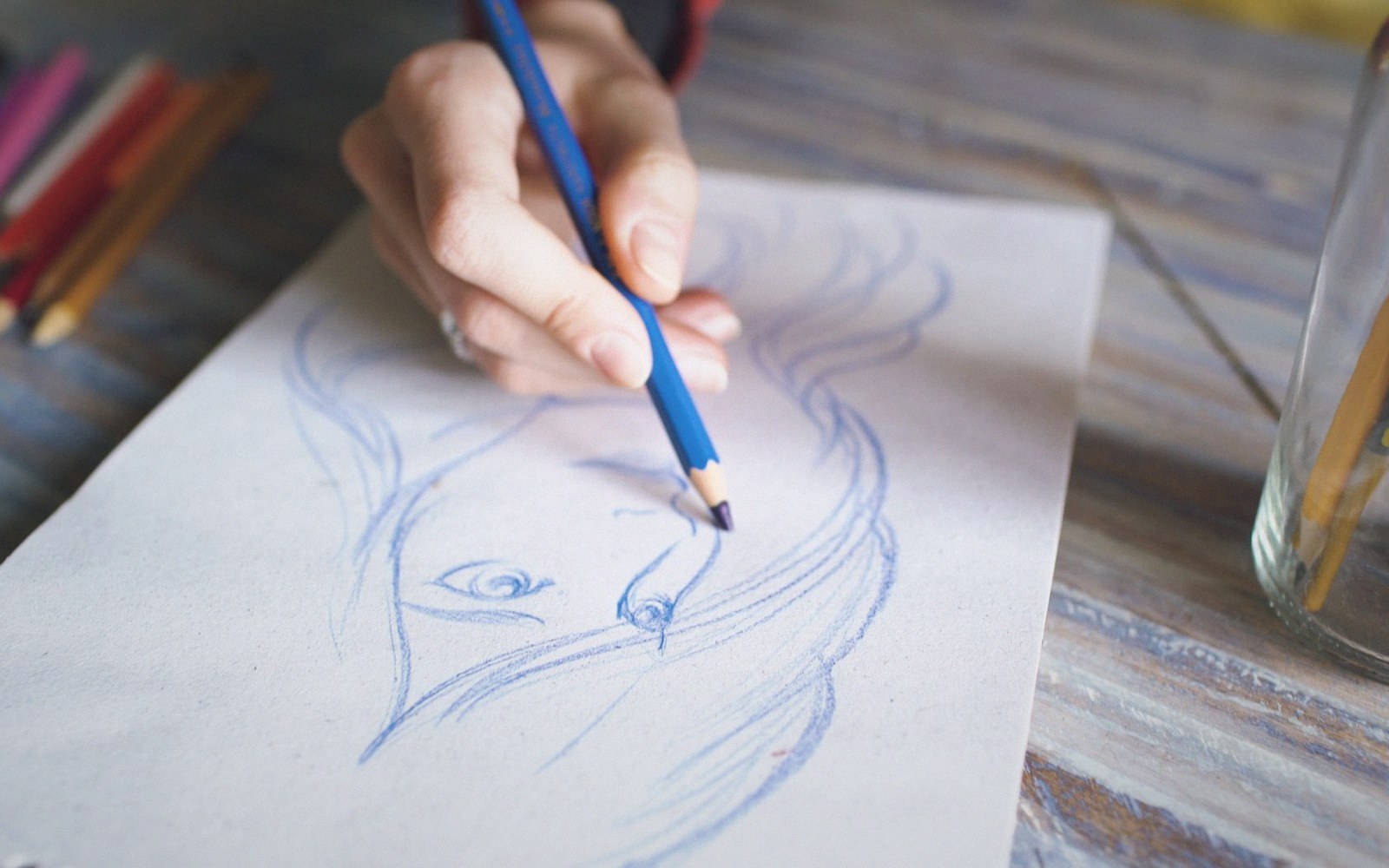
Non-photo blue is a specific hue, somewhere between sky and cyan, that orthochromatic and early panchromatic film — and later, the process cameras used in print shops — could not register. Draw in it and the camera would see a blank page. Only the ink you laid over it would reproduce.
That single optical fact changed how artists worked. Before it, a cartoonist who pencilled tightly had two choices: erase every construction line before inking, or accept that faint graphite would muddy the final film. Erasure took time and roughed up the paper surface; skipping it risked contamination. Non-photo blue made the problem disappear. Pencil loose and structural — indicate the head as an oval, the hand as a wedge, rough in the lettering guides — then ink directly over the whole thing. The camera would do the editing.
The practical result was a cleaner separation between the thinking stage and the mark-making stage. Pencilling with blue is fundamentally different from pencilling with graphite: you stop worrying about whether a line is definitive, because you know it is not permanent in any reproductive sense. That permission loosens the hand. Tighter, more confident inking tends to follow.
The blue had to be right. Manufacturers settled on a specific pigment formulation — often labelled Col-Erase or simply "non-repro blue" — and art directors tested new batches against their house process camera before committing. Too warm a blue and traces would show; too dark and it behaved like graphite. Markers and mechanical pencils loaded with the same pigment extended the system into layout and lettering guides.
Digital workflows have kept the colour alive as a convention. Most drawing software has a "non-photo blue" layer preset or a named swatch. Scanned artwork is cleaned by desaturating or channel-separating — the red channel carries the blue pencil most strongly, so working from the blue channel (or dropping the red one) leaves the ink alone. The underlying logic is identical to what a process camera did in a darkroom fifty years ago; only the mechanism changed.
What the camera couldn't see, the reader still can't see — and the work, freed from the labour of erasure, often shows a confidence at the inking stage that would have cost more to reach any other way.