Spotting blacks
Before tone, before cross-hatching, before any rendering decision: the solid areas are placed first.
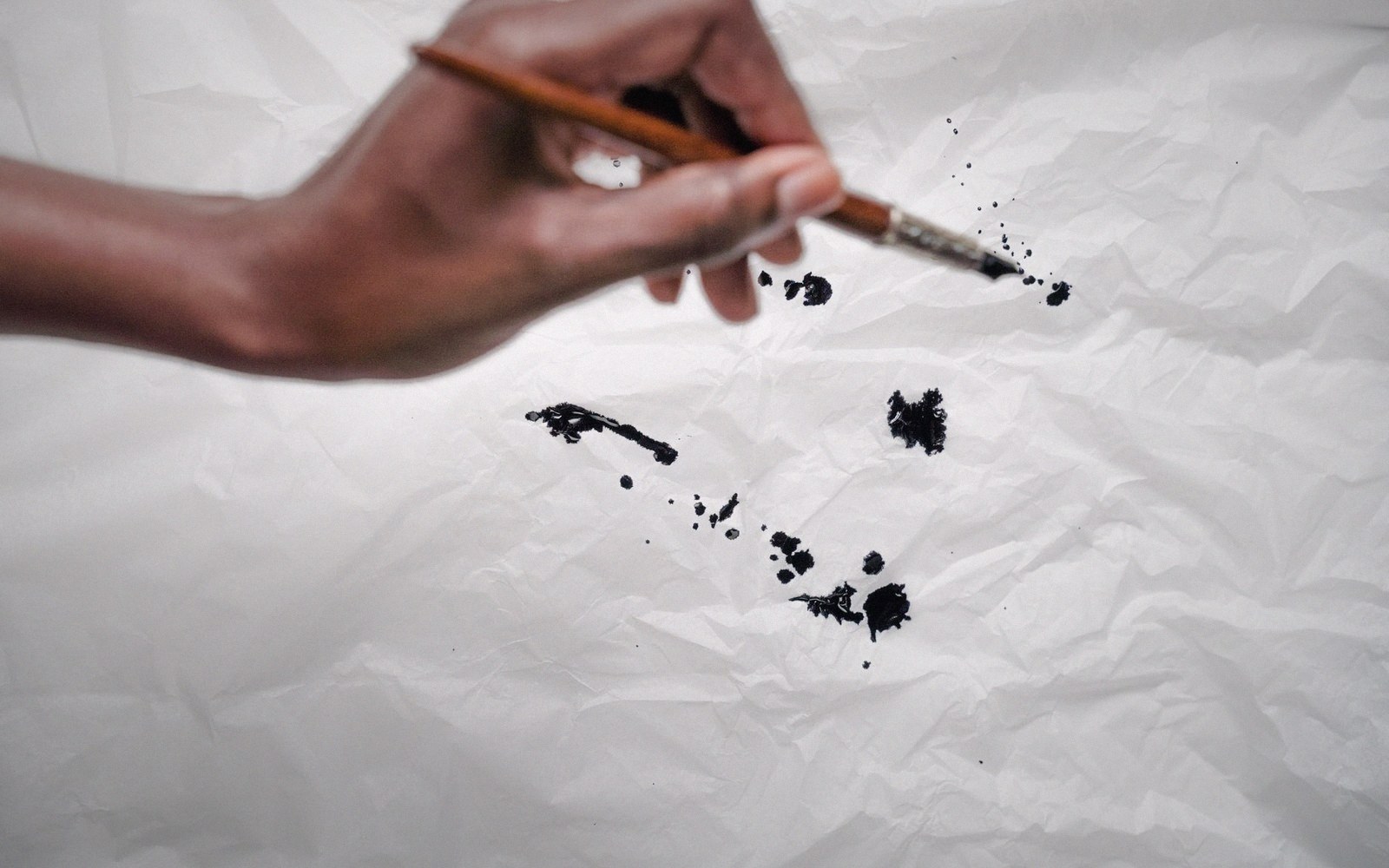
The first structural mark
Spotting blacks is not a rendering technique. It is a compositional decision — made, ideally, at the pencil stage — about which areas of a panel will be filled solid. Those areas anchor the read. They pull the eye, create shadow without graduation, and give the line its structural weight.
The decision comes before the brush touches ink. A figure in a dark interior gets a solid back; a night scene reads as night because the sky is a flat black field, not because stars are picked out in white. The shape of the black mass matters as much as its location: a roughly rectangular shadow reads as architectural; a spiked or irregular silhouette reads as organic or threatening. You are drawing with absence of light, not describing it.
The discipline is to place those masses early and simply. Experienced cartoonists often block them in at the thumbnail stage — at two inches across, a blob of pencil that stands for a black area is the same decision a filled panel will demand later, only faster and cheaper to revise. What looks wrong at stamp size will look wrong at print size; what reads clearly in miniature will survive reduction without losing its purpose.

Where blacks go wrong is in the addition phase. An inker who spots blacks while rendering is making two decisions simultaneously, and one tends to suffer. The fill becomes timid — patchy shadows, incomplete silhouettes, abandoned half-dark areas — because rendering and massing are different thinking modes. Spotting first, rendering afterward, keeps each stage clean.
Scale matters. A black area that represents a cast shadow on a human figure should be sized relative to the panel, not to anatomical accuracy. Comics printing reduces detail; a shadow rendered in fine hatching may close up entirely at print scale, while a solid black that looked blunt on the original art reads as exactly right in the finished book. This is why line weight as depth is a companion decision: the heavy outside contour and the solid fill are parts of the same spatial grammar.
A panel spotted well before any grey or texture is applied is already half-composed. The rendering that follows is adjustment, not foundation.